
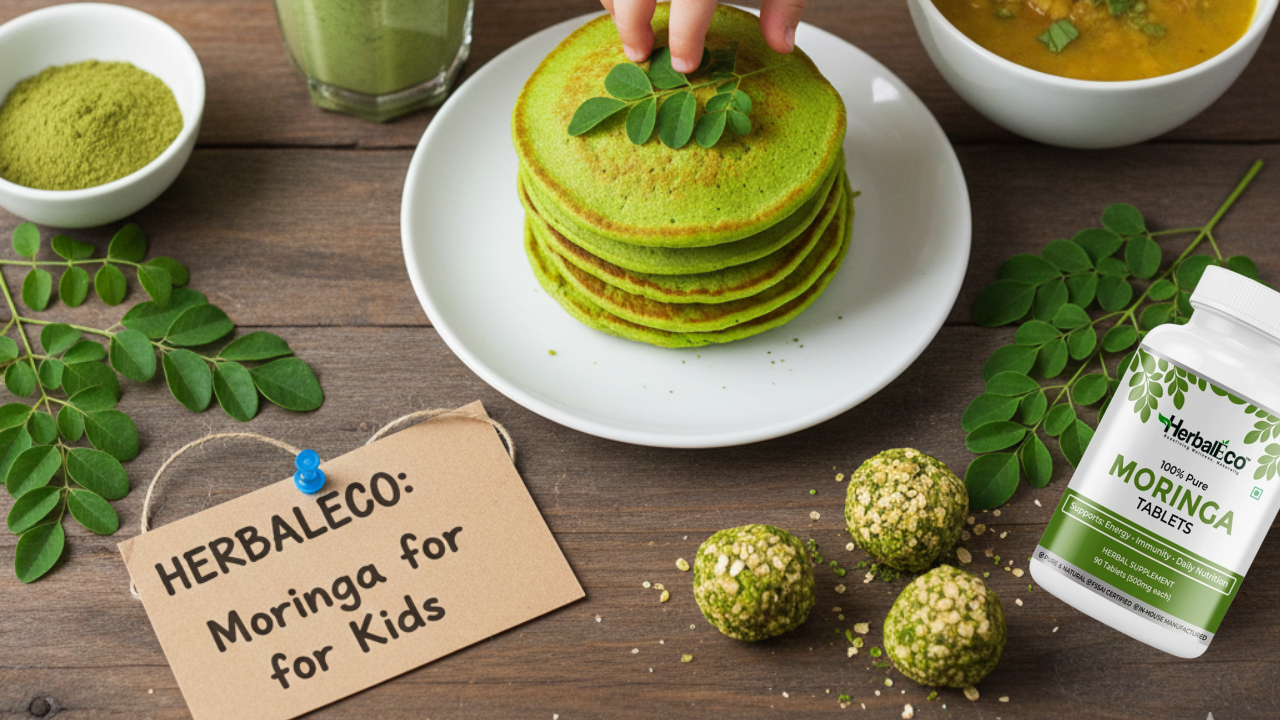
Moringa for Kids: Safety, Benefits & How to Add It to Their Diet
Parents today are more conscious than ever about what their children eat. With rising concerns over processed foods, excess sugar, and nutrient deficiencies, many families are turning toward natural superfoods to support healthy growth and strong immunity.
One such superfood is Moringa oleifera, often called the “Miracle Tree.” Celebrated for its dense nutritional profile, moringa has long been used in traditional diets and wellness practices. But while its benefits for adults are widely discussed, many parents still ask:
- Is moringa safe for kids?
- How much should children take?
- And how can it be added to meals without a daily struggle?
This guide from Herbaleco answers these questions by exploring moringa’s safety, benefits for child health, recommended dosage, and simple, kid-friendly ways to include it in everyday diets.
Is Moringa Safe for Kids?
Safety is always the first concern for parents—and rightly so.
- Leaves & powder: Safe for children when consumed in moderate, age-appropriate amounts.
- Roots & bark: Should be avoided, as they may contain compounds unsuitable for children.
- Dosage: Small quantities (¼–½ teaspoon of moringa powder daily) are generally suitable for children over 3 years old.
- Medical advice: Always consult a pediatrician before introducing any new supplement.
Trust-Building Insight
At Herbaleco, we emphasize transparency. Moringa is safe and beneficial when used responsibly, without exaggerated claims and with clear dosage guidance.
Nutritional Benefits of Moringa for Child Health
Children need balanced nutrition to support physical growth, immunity, and cognitive development. Moringa offers a wide spectrum of essential nutrients, including:
- Protein: Supports muscle and tissue development
- Calcium & Magnesium: Strengthen bones and teeth
- Iron & Folate: Help prevent anemia and support energy levels
- Vitamin A: Enhances vision and immune function
- Vitamin C & E: Protect against infections and oxidative stress
How Moringa Compares to Common Foods
| Nutrient (per 100g) | Moringa Leaves | Milk | Carrots | Oranges |
|---|---|---|---|---|
| Calcium | 185 mg | 125 mg | 33 mg | 40 mg |
| Vitamin A | 378 mcg | 68 mcg | 835 mcg | 11 mcg |
| Vitamin C | 220 mg | 0 mg | 6 mg | 53 mg |
| Iron | 4 mg | 0.1 mg | 0.3 mg | 0.1 mg |
This comparison shows how moringa can complement everyday foods and help fill nutritional gaps in a child’s diet.
Moringa for Immunity & Seasonal Wellness
Children are especially prone to colds, flu, and seasonal infections. Moringa supports immune health through:
- Vitamin C & Zinc: Strengthen immune cells
- Antioxidants: Reduce oxidative stress
- Anti-inflammatory compounds: Help ease respiratory discomfort
Adding moringa to soups or warm meals during winter can be a simple way to support natural immunity.
Moringa for Growth & Cognitive Development
Moringa’s nutrients also play a role in physical and mental development:
- Protein & amino acids: Support healthy growth
- Iron & folate: Improve focus and reduce fatigue
- Omega fatty acids (from moringa oil): Support brain development
Studies suggest that moringa’s nutrient density may help improve learning outcomes by addressing common micronutrient deficiencies.
Recommended Dosage for Children
Herbaleco recommends the following general guidelines:
- Toddlers (2–5 years): ¼ teaspoon moringa powder daily
- Children (6–12 years): ½ teaspoon daily
- Teens (13–18 years): 1 teaspoon daily
Always start with smaller amounts and observe tolerance. Mixing moringa into familiar foods works better than offering it directly.
How to Add Moringa to a Child’s Diet
Picky eating is common—but moringa can be blended into meals creatively:
- Smoothies: Banana, milk, honey, and a pinch of moringa
- Soups: Stir into vegetable or lentil soups
- Pancakes: Mix into batter with spinach or banana puree
- Energy balls: Combine with oats, dates, and nuts
- Juices: Add to orange or apple juice
Simple Recipe Ideas
- Moringa Banana Smoothie: ½ tsp moringa + banana + milk
- Green Pancakes: Whole wheat flour + spinach puree + moringa
- Immunity Soup: Lentils, carrots, turmeric, and moringa
Safety Tips for Parents
- Introduce moringa gradually
- Avoid excessive consumption
- Choose organic, pesticide-free moringa (Herbaleco standard)
- Monitor for allergies or digestive discomfort
Herbaleco’s Approach: Trust & Transparency
At Herbaleco, we understand parents’ concerns and priorities. That’s why we focus on:
- Quality assurance: Organic, sustainably sourced moringa
- Clear dosage guidance: Age-appropriate recommendations
- Educational content: Empowering families to make informed choices
- Legacy: Honoring Ramu Sir’s vision of farmer empowerment
Final Thoughts
Moringa oleifera is a safe, nutrient-dense superfood that can support children’s growth, immunity, and overall wellness when used responsibly. By introducing it in small amounts and blending it into familiar foods, parents can nurture healthy habits without resistance.
At Herbaleco, we celebrate moringa not just for its nutritional power, but also for its sustainability and positive impact on farming communities. For families seeking natural wellness solutions, moringa offers a trusted path to resilience, vitality, and holistic child health.